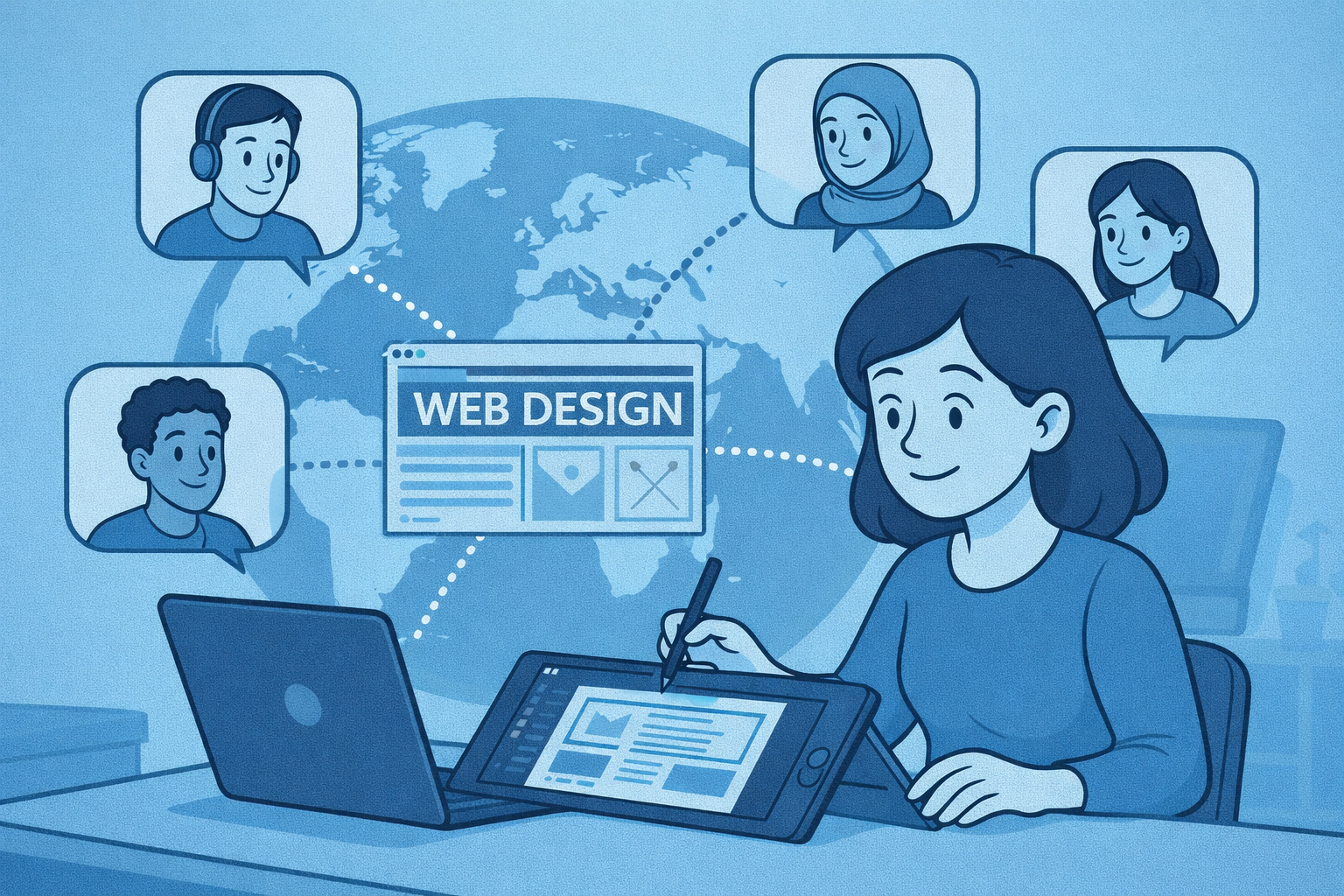

The world of work has undergone a transformation unlike anything seen in previous decades. As remote work became mainstream, digital collaboration tools became more accessible, and global connectivity reached new heights, the boundaries that once restricted career opportunities have dissolved. For web designers, this shift has opened a world of unprecedented opportunity. In 2026, web design has become one of the most globalized digital professions, and companies are now hiring designers from virtually anywhere on the planet.
This shift is not just a temporary trend—it represents a permanent redefinition of how creative, technical, and digital teams operate. Businesses have learned that talent is not limited by geography, and web designers have learned that their careers can flourish beyond the constraints of their local job markets. Whether a designer is based in Little Rock, Manila, Lagos, Warsaw, or Bangalore, their skills and creativity can now place them on global project teams and in international job markets with ease.
For job seekers and professionals navigating career decisions, understanding this globalization is essential. The web design industry is expanding in ways that empower talent from all backgrounds, and companies are embracing this shift to access a richer, more diverse creative workforce. The question is no longer “Where can I find a job near me?” but rather “How can I position myself for global opportunities?”
Why Web Design Became a Global Profession
Web design has always been a skill practically suited for remote work, but the wider business world was slower to adopt remote hiring until recent years. As the digital economy surged and businesses realized they needed strong online identities to compete, the demand for web designers exploded. Companies searching for talent discovered that the best designers weren’t necessarily located nearby—they were scattered across the globe.
The rise of cloud-based tools, collaborative design platforms, and virtual communication software erased the need for physical proximity. Projects that once required in-office meetings now happen seamlessly via Zoom, Figma, Slack, Notion, and project management tools. Designers and businesses realized that working across continents is no more complicated than working across town.
This shift made it possible for designers worldwide to gain international clients and employers. It also encouraged agencies, such as EagleEdge Marketing, to work with clients from different countries, proving that professional web design thrives in a distributed work environment. As global collaboration became normalized, web design evolved from a local service into an international career path accessible to anyone with the skills and portfolio to compete.
Companies Want Global Designers for Their Diverse Perspectives
One of the most significant advantages of hiring designers globally is the diversity of creative thinking that comes from different cultural, artistic, and digital traditions. Design is influenced by cultural experiences, visual trends, storytelling styles, and local aesthetics. A designer in Japan may approach minimalism differently than a designer in South America. A designer in India may instinctively understand mobile-first design due to regional consumer behavior. A designer in Europe may have strong grounding in typography and grid systems due to the continent’s rich design history.
Businesses now recognize that creativity is strengthened by diversity. When companies hire globally, they get access to a wide range of ideas, approaches, and solutions. This diversity leads to richer user experiences, unique branding opportunities, and digital products that feel fresh rather than predictable.
This is especially important in industries where brand identity matters deeply. Agencies offering Web Design Little Rock services have seen an increase in clients who want creativity with a global influence while still maintaining a local feel. This blend of cultural perspectives produces work that stands out in a saturated digital landscape.
The Global Talent Pool Solves Local Skill Shortages
In many regions, there simply are not enough trained web designers to meet demand. As businesses around the world expand, they encounter talent shortages that can slow growth or compromise quality. Global hiring solves this problem by expanding the talent pool far beyond geographic borders.
Companies in countries experiencing shortages in technical or creative roles now recruit internationally to fill critical positions. This provides enormous opportunity for designers in regions like Southeast Asia, Eastern Europe, India, and Africa, where skilled designers may have limited access to high-paying local opportunities but abundant access to international ones.
At the same time, designers in smaller U.S. cities or rural communities, such as those served by agencies in Little Rock, are no longer limited by local business demand. They can work globally while living where they choose. This new mobility empowers designers to shape careers based on passion rather than location.
Remote Work and International Collaboration Are Now Standard Practice
Before 2020, many businesses resisted remote work because they believed creativity required physical proximity. Today’s design tools have completely overturned that misconception. Collaborative platforms allow multiple designers to work simultaneously, leave comments, test prototypes, share wireframes, and create visual systems—all in real time.
Companies now routinely build digital teams composed of individuals across five or ten different time zones. A designer in the Philippines may hand off a draft to a developer in the U.S. before ending their day, who then passes that work to a strategist in Europe. With this model, projects potentially move forward 24 hours a day.
Global hiring has introduced an efficiency that was once impossible. Businesses appreciate the speed, flexibility, and continuous progress that comes from distributed teams. This has made remote design teams not only practical but often superior to on-site alternatives.
Cost Efficiency Without Compromising Quality
One of the driving forces behind globalization of web design careers is cost efficiency. Hiring locally in countries with high labor costs can be expensive for small businesses, startups, and entrepreneurs. But global recruitment allows companies to find designers who offer competitive pricing while still delivering world-class quality.
This creates a win-win scenario. Designers in regions with emerging tech markets gain access to international clients who pay significantly more than local clients, raising their earning potential. Meanwhile, businesses gain access to high-quality design at more affordable rates. This economic alignment is one of the strongest forces powering globalization.
Agencies like EagleEdge Marketing illustrate this balance by serving clients from various industries and locations while offering competitive pricing and top-tier design. Companies benefit from working with professionals who understand both universal design principles and regional business needs.
Portfolio-Driven Hiring: Skill Matters More Than Location
The hiring process for web design has evolved dramatically. Traditional resumes still matter, but the real deciding factor is the designer’s portfolio. Employers want to see creativity, structure, user experience thinking, consistency, and the ability to solve visual and functional problems.
This merit-based approach levels the playing field globally. A student designer in Nepal can compete with a designer in New York if their portfolio demonstrates strong UI/UX understanding. This democratization of opportunity reinforces that web design is a career where talent, not geography, determines success.
Many companies also prefer designers who maintain personal branding websites, which showcase their personality, skills, and creative identity more effectively than any resume. These websites serve as live demonstrations of technical capability and design thinking. Professionals who understand branding, like those at EagleEdge Marketing, highlight how even companies treat their websites as their most important digital asset—meaning designers who build impressive sites for themselves inspire confidence in employers.
The Demand for Specialized Skills Is Increasing
Companies in 2026 are no longer just hiring “web designers.” They want specialists who understand:
- UI/UX psychology
- Responsive design
- Minimalist design systems
- Conversion-focused layouts
- Accessibility standards
- Front-end technologies
- Branding and storytelling
- Animation and micro-interactions
A designer who specializes in user experience may now collaborate with designers who specialize in branding, motion design, or front-end development—often from different countries.
Because of this growing specialization, employers prefer access to a broad global talent pool. It’s unlikely one small region will offer all the specialized skills needed. By hiring internationally, companies assemble diverse, highly skilled teams capable of delivering complex digital products.
Local Businesses Are Also Becoming Global Clients
An important trend is that even small local businesses now hire international web designers. A bakery in Kansas may hire a designer in India. A fitness coach in Australia may hire an agency in Arkansas. A real estate agent in Canada may hire a designer in the Philippines. Web design is now an international service—even for small, local companies.
This is because business owners want websites that feel premium and modern, and they are no longer limited to choices within driving distance. They search online, compare portfolios, and choose the designer who aligns with their vision.
Little Rock-based web design firms serve small businesses across America, while Indian design teams serve clients from Europe and the Middle East. This international exchange strengthens the entire industry.
Web Design Careers Offer Location Independence
For job seekers, the globalization of web design is a dream scenario. Designers can live anywhere, work from any environment, and pursue clients from around the world. This lifestyle has become one of the most attractive aspects of the profession.
Instead of relocating for job opportunities, designers bring opportunities to themselves. They can build careers while living close to family, traveling, or maintaining personal freedom. Many designers even choose to work as digital nomads, exploring the world while taking on global projects.
Location independence is now one of the biggest career incentives for students studying design, as well as professionals switching careers.
How Designers Can Succeed in a Global Market in 2026
To thrive in the global web design industry, designers must focus on skills that transcend geography. This includes mastering modern design tools, building a strong portfolio, developing communication skills, understanding branding, and staying current with design trends. Soft skills such as empathy, storytelling, and user experience intuition are also critical.
Designers must think beyond aesthetics. Companies want professionals who understand business goals, conversion strategy, and user psychology. The more a designer blends creativity with strategy, the more valuable they become in global markets.
Conclusion: The Future of Web Design Careers Is Borderless
The globalization of web design careers has unlocked incredible opportunities for both designers and businesses. Companies now have access to talented individuals wherever they are, while designers gain access to meaningful, well-paying work without geographic limitations. This borderless creative marketplace fosters innovation, diversity, and excellence.
As businesses continue to embrace digital-first strategies, hiring globally will remain the norm. Designers who understand cultural nuance, design psychology, user experience, and modern branding will be in the highest demand. Agencies like EagleEdge Marketing showcase how cross-cultural design strategy strengthens digital identity and elevates brand presence.
In 2026 and beyond, web design is not just a job—it is a global profession. And the designers who thrive will be the ones who understand the value of a connected world where creativity flows freely across borders.